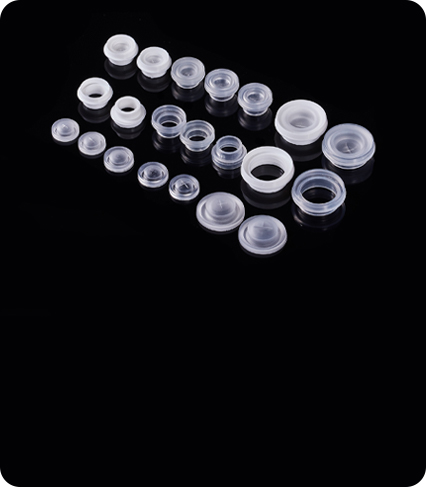
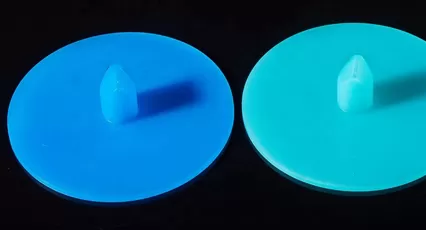
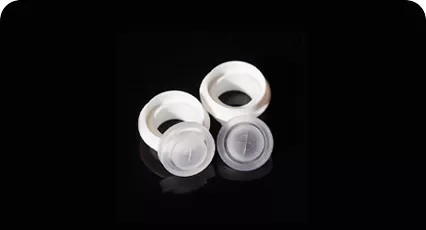
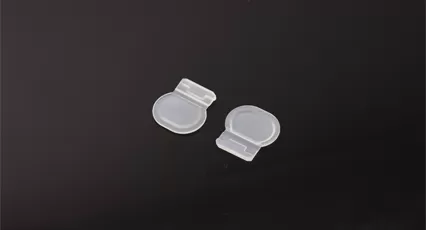
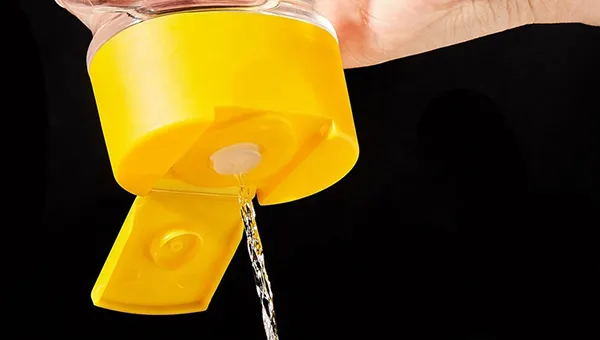
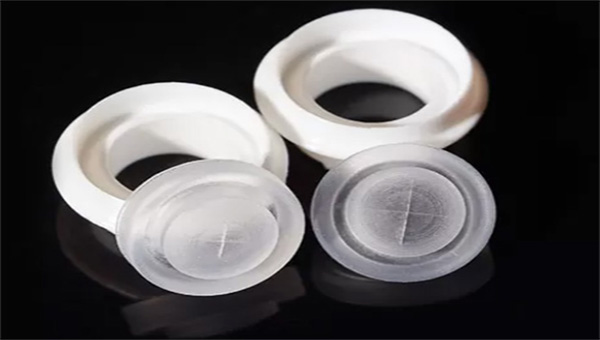
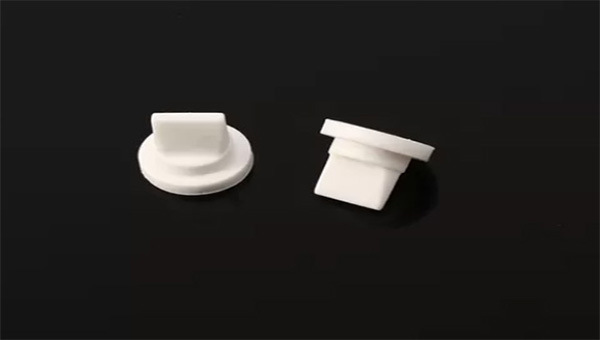
Silicone valves are self-sealing flow control components designed for precise and reliable dispensing. Acting as a flexible membrane, the valve remains closed under normal conditions and opens automatically when internal pressure is applied. This structure allows liquids, air, or semi-fluids to pass through smoothly while effectively preventing leakage and backflow, making silicone valves ideal for applications requiring consistent performance and long-term durability.
TPE valves, on the other hand, are made from thermoplastic elastomer materials. Compared with silicone, TPE offers relatively lower elasticity and resilience, but its key advantage lies in recyclability and cost efficiency. TPE valves are therefore often selected for applications where environmental considerations, material reuse, or disposable product requirements are priorities.
At Hopewell, we are committed to delivering high-quality, cost-effective, and environmentally responsible elastomer valve solutions. After years of technical development and process optimization, we have established stable mass production capabilities for both silicone valves and TPE valves, enabling us to support customers with consistent quality, scalable output, and reliable supply.
Today, we would like to introduce the key differences between silicone valves and TPE valves from two important perspectives: manufacturing processes and application scenarios.
Silicone valves are primarily manufactured through compression molding and LSR (Liquid Silicone Rubber) injection molding. These processes rely on a chemical vulcanization reaction in which silicone transforms from a liquid or semi-liquid state into a solid elastomer through the action of curing agents. This chemical crosslinking gives silicone valves their superior elasticity, temperature resistance, and long-term sealing stability.
TPE valves are produced mainly by thermoplastic injection molding. In this process, solid TPE pellets are heated until they melt into a fluid state and then injected into a mold. The material solidifies as it cools, forming the final valve shape. This is a physical process rather than a chemical reaction, which enables efficient recycling and fast production cycles, but generally results in lower performance under extreme temperature, pressure, or repeated-use conditions.
Silicone valves and TPE valves serve different functional requirements in real-world applications.
TPE valves are commonly used in disposable or low-frequency-use products, where cost control and material recyclability are critical. Typical applications include packaging closures for food and beverage, household cleaning products, and personal care containers. In these markets, TPE valves provide sufficient sealing and dispensing performance for short-term or single-use products.
Silicone valves, by contrast, offer broader applicability and superior performance. Beyond packaging, silicone valves are widely used in medical devices, healthcare products, industrial fluid control systems, and harsh operating environments that demand high levels of sealing integrity, chemical resistance, temperature stability, and flow precision. Their ability to maintain performance under repeated cycles and extreme conditions makes silicone valves the preferred solution for mission-critical applications.
In addition to standard silicone and TPE valves, Hopewell manufactures custom elastomer valves using a variety of material options to meet specific chemical, thermal, and mechanical requirements. We provide prototype tooling, low-volume validation, and scalable high-volume production, enabling fast product development and long-term supply stability.
Whether your project requires specialized geometries, unique material properties, or application-specific performance, our engineering team is equipped to deliver reliable, manufacturable valve solutions that balance performance, cost, and sustainability.
If you have any questions about us, you can leave a message online or contact us!
 EN
EN